
Agenda
5 p.m. - Panel & Discussion/Lecture
Campus Center Ballroom
UMass Boston
Welcome
- Christa Kelleher, Center for Women in Politics & Public Policy, McCormack Graduate School
- Marcelo Suárez-Orozco, Chancellor (recorded greeting)
- Joseph Berger, Provost
- Professor Michael Johnson, Department of Public Policy & Public Affairs
Musical Offering
- UMass Boston Chamber Singers
- David Giessow, Conductor & Terry Halco, Accompanist
Lecture & Discussion
- Reverend Dr. Gloria White-Hammond
- Reverend Dr. Ray Hammond
- Reverend Mariama White-Hammond
Recognition of Max Mian, 2026 Wood Internship Recipient
Closing & Invitation to Reception
6:45 p.m. - Reception
Alumni Lounge
Campus Center
UMass Boston
Select Readings & Resources
The full bibliography assembled for this year’s Wood Visiting Professorship includes more than 100 entries, spanning centuries of moral and civic thought. This shorter list offers a compact, accessible on ramp to the lecture and discussion on September 23rd. It includes a mix of primary sources behind the phrase “City on a Hill,” Robert C. Wood’s own words, and several contemporary works addressing both the country’s founding and the concept of “civic moral compass.” Please note this is not meant to be a comprehensive list—there are many disciplines and dimensions involved with questions of ethics, values, and morality, especially regarding the “civic” side. We do hope it whets your appetite, though, and inspires further inquiry and reflective practice.
Robert C. Wood, in His Own Words and Remembered
Robert C. Wood, “Urban Independence,” Independence Day Oration, delivered in Faneuil Hall, Boston, July 4, 1968.
Wood’s own articulation of civic ideals for the city
Richard A. Hogarty and Marcy Murninghan, “Two Salutes to Robert C. Wood, 1923–2005,” New England Journal of Public Policy, Vol. 20, No. 2, March 21, 2005.
A concise portrait of Wood’s character and legacy
The Source of “City on a Hill”
John Winthrop, “A Model of Christian Charity,” 1630.
A sermon that coined the image at the heart of the civic moral compass theme
Mark Peterson, review of Daniel T. Rodgers, As a City Upon a Hill: The Story of America’s Most Famous Lay Sermon, English Historical Review, vol. 135, issue 575 (August 2020), 1024–1026.
A brief account of how Winthrop’s phrase traveled from Puritan sermon to modern political cliché
The Founding, Reconsidered
Danielle Allen, Radical Duke: How One Aristocrat—and the American Revolution— Transformed Britain (New York: Liveright, June 2026).
A tracing of the Revolution's transatlantic roots offering a reminder about how the founding moral claims of the nation were contested and unsettled from the beginning
Pauline Maier, American Scripture: Making the Declaration of Independence (New York: Vintage Books, 1998).
A tale of two different but related stories: the original making of the Declaration (along with 90 other declarations throughout the 13 colonies) and its subsequent remaking into what most Americans know, remember, and revere
The Moral Distance Between Ideal and Practice
Frederick Douglass, “What to the Slave Is the Fourth of July?” July 5, 1852.
The classic counter-testimony to founding-era self-congratulation
Eddie S. Glaude, Jr., America, U.S.A.: How Race Shadows the Nation's Anniversaries (New York: Penguin Press, May 2026).
A timely reflection on how race complicates our civic self-image
Naming and Repairing the Breach
Daron Acemoglu, What Happened to Liberal Democracy? (New York: Penguin Random House, 2026)
Nobel Laureate analysis of how liberal elites failed to acknowledge heavy social and economic shocks that undermined shared prosperity, and what to do about it
Dana Meadows, “Leverage Points: Places to Intervene in a System,” (Heartland, VT: Sustainability Institute, 1999)
Landmark framework of 12 "leverage points" within complex systems, ranked in increasing order of effectiveness, showing where and how interventions can drive the most powerful structural change
Jon Meacham, The Soul of America: The Search for Our Better Angels (New York: Random House, 2019).
An accessible narrative of how the country has recovered its moral footing before
Robert Putnam, Bowling Alone: The Collapse and Revival of American Community (New York: Simon & Schuster, 2000).
The foundational diagnosis of eroding civic bonds
Michael Sandel, Democracy's Discontent: A New Edition for Our Perilous Times (Cambridge, MA: Harvard University Press, 2022).
A leading philosopher's case for renewing a shared public philosophy of the common good
Yuval Levin, American Covenant: How the Constitution Unified Our Nation, and Could Again (New York: Basic Books, 2024).
A hopeful, constitutionally grounded argument for how shared institutions can still bind us together
Jill Lepore, We the People: A History of the U.S. Constitution (New York: Liveright Publishing, 2025).
A sweeping history of the Constitution
Jeffrey A. Winters, The Blind Spot: How Oligarchs Dominate Our Democracy (New York: Scribner, May 26, 2026).
A chronicle of wealth power pushing the world into "participatory inequality,” and how to address it
Moral Reckoning
Senator Reverend Raphael G. Warnock, The Crooked Places Made Straight: Reflections on the Moral Meaning of America (New York: Penguin Press, June 2026).
A biblically inflected meditation on America's moral meaning, calling for us to reach for the highest and noblest aspects of our national character
Loretta J. Ross, Calling In: How to Start Making Change with Those You'd Rather Cancel (New York: Simon & Schuster, February 2026).
A practical, hopeful guide to civil disagreement

Reverend Gloria E. White-Hammond, MD, serves as Co-Pastor of Bethel AME Church in Boston and is the Swartz Resident Practitioner in Ministry Studies at Harvard Divinity School. A graduate of Boston University, Tufts University School of Medicine, and Harvard Divinity School, Rev. Gloria White-Hammond co-founded My Sister's Keeper in 2002, a humanitarian and human rights organization that champions social justice for women and girls in conflict zones.
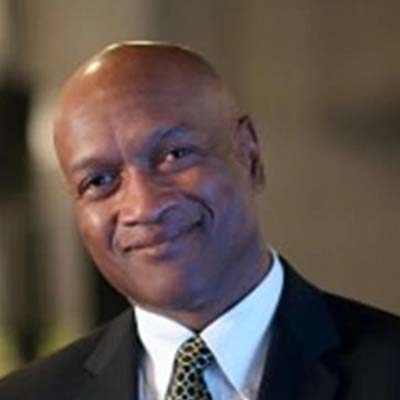
Reverend Ray A. Hammond, MD is Senior Pastor at Bethel AME Church in Boston. Educated as a physician at Harvard Medical School, he earned his MA in the Study of Religion at Harvard University. His long history of involvement with youth and community activities includes co-founding the Ten Point Coalition, an ecumenical group of Christian clergy and lay leaders working to mobilize the greater Boston community around issues affecting youth.

Reverend Mariama White-Hammond is founding pastor of New Roots AME Church in Dorchester and has extensive background in embedding equity and environmental justice into Boston’s communities. In 2021, Rev. Mariama White-Hammond was appointed as Chief of Environment, Energy, and Open Space for the City of Boston and served in this role for three years. She earned her Master of Divinity at the Boston University School of Theology.
All Readings & Resources
Robert C. Wood
- Robert C. Wood, "Ethics in Government as a Problem in Executive Management," Public Administration Review, Vol. 15, No. 1 (Winter 1955), pp. 1-7, https://doi.org/10.2307/972560
- Robert C. Wood, Suburbia: Its People and Their Politics (Boston: Houghton Mifflin Co., 1958)
- Robert C. Wood, Metropolis Against Itself (Washington, D.C.: Committee for Economic Development, March 1959)
- Robert C. Wood, with Vladimir V. Almendinger, 1400 Governments: The Political Economy of The New York Metropolitan Region (New York: Anchor Books, 1961)
- Robert C. Wood, Independence Day Oration, 1968: Urban Independence, (Boston: City of Boston Printing Section, 1968) https://drive.google.com/file/d/1kOd2TT0Rrp2cDgliLTpoT1FNiljmNFPs/view
- Robert C. Wood, “Professionals at Bay: Managing Boston’s Public Schools,” Journal of Policy Analysis and Management, Vol. 1, No. 4 (Summer 1982), pp. 454-468 JSTOR, https://doi.org/10.2307/3324775 and https://www.jstor.org/stable/3324775
- Robert C. Wood, “Looking Back Without Anger: Reflections on the Boston School Crisis,” New England Journal of Public Policy, Vol. 20, No. 2 (2005), https://scholarworks.umb.edu/nejpp/vol20/iss2/4/
- “Robert Wood Talks About The City,” June 1968 interview by P. Royal Shipp and William Robinson, Dialogue: A Journal of Mormon Thought, Vol. 3, Issue 3, 77-79, October 1968 Scholarly Publishing Collective, https://scholarlypublishingcollective.org/uip/dial/article-pdf/3/3/77/1901088/45224021.pdf
- Robert C. Wood, recorded interview by John F. Stewart, January 29, 1968, (page number), John F. Kennedy Library Oral History Program. Available at: https://www.jfklibrary.org/asset-viewer/archives/jfkoh-rew-01 Transcript: https://static.jfklibrary.org/2r4776u2oscgyq5a1pr6663s0oag365t.pdf
- “Two Salutes to Robert C. Wood, 1923-2005,” by Richard A. Hogarty and Marcy Murninghan, New England Journal of Public Policy, Vol. 20, No. 2, March 21, 2005 Available at: https://scholarworks.umb.edu/nejpp/vol20/iss2/3?utm_source=scholarworks.umb.edu%2Fnejpp%2Fvol20%2Fiss2%2F3&utm_medium=PDF&utm_campaign=PDFCoverPages
- Alexander von Hoffman, “Into the Wild Blue Yonder: The Urban Crisis, Rocket Science, and the Pursuit of Transformation Housing Policy in the Great Society, Part Two,” W11 Joint Center for Housing Studies, Harvard University, March 2001 https://www.jchs.harvard.edu/sites/default/files/w11-3_von_hoffman.pdf
Books & Related Reviews
- Daron Acemoglu, What Happened to Liberal Democracy? Remaking a Politics of Shared Prosperity (New York: Penguin Random House, August 11, 2026)
- “Daron Acemoglu on Why Liberalism Became a Victim of Its Own Success,” a conversation with Yascha Mounk, The Good Fight, August 4, 2026.
- Danielle Allen, Radical Duke: How One Aristocrat ― and the American Revolution ― Transformed Britain (New York: Liveright, June 2026)
- Adam Gopnik, “Did a Rowdy English Nobleman Mastermind the American Revolution?“ The New Yorker, June 8, 2026
- Danielle Allen in conversation with Eric Nelson, Harvard Book Store, July 20, 2026 YouTube video to be uploaded.
- Joseph L. Badaracco, Jr., Your True Moral Compass: Defining Reality, Responsibility, and Practicality in Your Leadership Moments, SpringerBriefs in Philosophy. (Cham, Switzerland: Springer, 2023)
- Robert N. Bellah, Richard Madsen, William M. Sullivan, Ann Swidler, Stephen M. Tipton, Habits of the Heart: Individualism and Commitment in American Life, With a New Preface [1985] (Internet Archive, September 28, 2011)
- Lee C. Bollinger and Geoffrey R. Stone, Social Media, Freedom of Speech, and the Future of Our Democracy (Oxford University Press, 2022)
- Robert H. Bremner, American Philanthropy, 2nd ed. (University of Chicago Press, June 1988)
- Robert Coles, The Call of Service: Witness to Idealism (Boston: Houghton-Mifflin, 1993)
- John Elkington, The Zeronauts: Breaking the Sustainability Barrier (London: Routledge, September 18, 2018)
- Cannibals With Forks [1988] (Internet Archive, August 29, 2013)
- John Elkington and Julia Hails, The Green Consumer Guide: From Shampoo to Champagne, How to Buy Goods that Don't Cost the Earth [1988] (Internet Archive, May 30, 2020)
- The Young Green Consumer Guide (London: Puffin Books, April 24, 1997)
- Albert O. Hirschman, Exit, Voice, and Loyalty: Responses to Decline in Firms, Organizations & States (Cambridge: Harvard University Press, 1972)
- Richard Hofstadter, Anti-Intellectualism in American Life (New York: Penguin Random House, February 12, 1966)
- Michael Johnston, Syndromes of Corruption: Wealth, Power, and Democracy (Cambridge University Press, 2005)
- Michael Johnston, “Don't Fight Corruption - Fight for Justice,“ The Corruption, Justice & Liberty Program (Besa Global and The Fletcher School, Tufts University, September 29, 2021)
- Michael Johnston and Scott Fritzen, The Conundrum of Corruption: Reform for Social Justice (London: Routledge: December 31, 2020)
- Eddie S. Glaude, Jr., America, U.S.A.: How Race Shadows the Nation’s Anniversaries (New York: Penguin Press, May 2026)
- "Scholar Eddie Glaude Jr. reflects on America at 250,” NPR Fresh Air interview with Tonya Mosley, June 15, 2026
- Jill Lepore, We the People: A History of the U.S. Constitution (New York: Liveright Publishing, 2025)
- Yuval Levin, American Covenant: How the Constitution Unified Our Nation, and Could Again (New York: Basic Books, 2024)
- Alaisdair MacIntyre, After Virtue: A Study in Moral Theory, 3rd ed. (Notre Dame: University of Notre Dame Press, March 6, 2007)
- Pauline Maier [1998], American Scripture: Making the Declaration of Independence (New York: Vintage Books, 1998) (Internet Archive)
- Marcel Mauss, The Gift: Forms and Functions of Exchange in Archaic Societies (1925, later version published by W. W. Norton & Company, August 2000)
- Mariana Mazzucato, The Common Good Economy: A New Compass (London: Penguin Allen Lane, June 4, 2026)
- Gen. Stanley McChrystal, On Character: Choices That Define a Life (New York: Portfolio Press, Penguin Random House, May 13, 2025)
- Jon Meacham, The Soul of America: The Search for Our Better Angels (New York: Random House, April 30, 2019)
- Jon Meacham, “Jon Meacham on 'The Soul of America' at the 2018 National Book Festival,” published September 1, 2018, YouTube video, 24:11, posted by Library of Congress
- Jon Meacham, American Struggle: Democracy, Dissent, and the Pursuit of a More Perfect Union, An Anthology (New York: Random House, February 17, 2026)
- Donella H. Meadows, Thinking in Systems: A Primer ed. Diana Wright, Sustainability Institute (White River Junction, VT: Chelsea Green Publishing, 2008)
- Martha Minow, When Should Law Forgive? (New York: W. W. Norton & Company, September 24, 2019)
- Liz Mineo, “In her new book, legal scholar Martha Minow advocates for the power of forgiveness,” Harvard Gazette, December 9, 2019
- Martha Minor, Saving the News: Why the Constitution Calls for Government Action to Preserve Freedom of Speech (Oxford: Oxford University Press, September 24, 2021)
- Robert A.G. Monks and Nell Minow, Power and Accountability: Restoring the Balance of Power Between Corporations, Owners, and Society. (New York: HarperCollins, 1991)
- Robert A.G. Monks and Nell Minow, Corpocracy: How CEOs and the Business Roundtable Hijacked the World’s Greatest Wealth Machine—and How to Get It Back. (Hoboken, NJ: John Wiley & Sons, Inc., 2008)
- Robert A.G. Monks and Nell Minow, An Outsider’s History of Harvard and Responsible Investment, 1970–2014, with Marcy Murninghan (Cambridge: Harvard Responsible Investment Coalition, February 14, 2014)
- Robert A.G. Monks and Nell Minow, “American Oligarchs Prevail,” remarks made to the Annual Conference of the International Corporate Governance Network (ICGN), London, July 16, 2024
- Robert A.G. Monks and Marcy Murninghan, Trusting Harvard: The Cost of Unprincipled Investing, (Miniver Press, 2014)
- Marcy Murninghan, “Money and Morality: Pathways Toward a Civic Stewardship Ethic.” Building Bridges Across Financial Communities: The Global Financial Crisis, Social Responsibility, and Faith-Based Finance (Cambridge, MA: Harvard Law School, ILSP, Islamic Finance Project, 2012)
- Reinhold Niebuhr, Moral Man and Immoral Society [1932] (Internet Archive)
- Martha Nussbaum, The Monarchy of Fear: A Philosopher Looks at Our Political Crisis (New York: Simon & Schuster, July 30, 2019)
- Mark Peterson, The Making and Breaking of the American Constitution: A Thousand-Year History (Princeton University Press: March 2026)
- Mark Peterson, reviewer of As a City Upon a Hill: The Story of America’s Most Famous Lay Sermon, by Daniel T. Rodgers (Princeton, 2018) English Historical Review, vol. 135, issue 575 (August, 2020), 1024-1026 https://doi.org/10.1093/ehr/ceaa153
- Robert Putnam, Bowling Alone: The Collapse and Revival of American Community (New York: Simon & Shuster, 2000)
- John Rawls, Justice as Fairness: A Restatement, ed. Erin I. Kelly (Cambridge, MA: Harvard University Press, May 16, 2001)
- Jeffrey Rosen, The Pursuit of Happiness: How Classical Writers on Virtue Inspired the Lives of the Founders and Defined America (New York: Simon & Schuster, 2024)
- Loretta J. Ross, Calling In: How to Start Making Change with Those You'd Rather Cancel (New York: Simon & Schuster, Feb. 10, 2026)
- Jean-Jacques Rousseau, The Social Contract [1762]
- Michael Sandel, Democracy’s Discontent: America in Search of a Public Philosophy (Cambridge, MA: Harvard University Press, 1996)
- Michael Sandel, What Money Can’t Buy: The Moral Limits of Markets. (New York: Farrar, Straus and Giroux, 2012)
- Michael Sandel, Democracy’s Discontent: A New Edition for Our Perilous Times. (Cambridge, MA: Harvard University Press,
October 28, 2022) - Michael Sandel, The Tyranny of Merit: What’s Become of the Common Good? (New York: Farrar, Straus and Giroux, 2020)
- Hanno Sauer, The Invention of Good and Evil: A World History of Morality (Oxford University Press, September
- Website: https://www.hannosauer.com
- Hanno Sauer, “The Invention of Good and Evil: A World History of Morality,“ Lecture, Studium Generale Maastricht University, Utrecht, Netherlands March 11, 2024 https://youtu.be/2n95GAyfQbQ?is=fGLf_jZtkRHpQ1to
- The Ethical Frontier, Episode 81, YouTube interview: https://youtu.be/as-abTaH0Zg
- Philip Selznick, The Moral Commonwealth: Social Theory and the Promise of Community (Berkeley: University of California Press, 1982)
- Theda Skocpol, Diminished Democracy: From Membership to Management in American Civic Life, The Julian J. Rothbaum Distinguished Lecture Series, Vol. 8 (Oxford University Press, 2004)
- “Working Together to Meet the Public Challenges of This Time,” Address to Phi Beta Kappa, Harvard Magazine, May 24, 2022 2024)
- Adam Smith, The Theory of Moral Sentiments [1759]
- See also Jesse Norman, Adam Smith: What He Thought and Why It Matters (Internet Archive, January 22, 2022)
- Max L. Stackhouse, Dennis P. McCann, Shirley J. Roels, and Preston N. Williams, eds., On Moral Business: Classical and Contemporary Resources for Ethics in Economic Life (1995)
- Howard Thurman, Meditations of the Heart, 1953 (Boston: Beacon Press, January 31, 2023)
- Thorstein Veblen [1923], Absentee Ownership: Business Enterprise in Recent Times – The Case of America (Internet Archive)
- Jon Von Til, Mapping the Third Sector: Voluntarism in a Changing Social Economy (New York: Foundation Center [now Candid], January 1988)
- Growing Civil Society: From Nonprofit Sector to Third Space (Bloomington & Indianapolis: Indiana University Press, 2000)
- Senator Reverend Raphael G. Warnock, The Crooked Places Made Straight: Reflections on the Moral Meaning of America (New York: Penguin Press, June 2026)
- Terry Tempest Williams, The Glorians: Visitations from the Holy Ordinary (New York: Grove Atlantic, March 3, 2026)
- James Q. Wilson, The Moral Sense (New York: The Free Press, February 1, 1995)
- Jeffrey A. Winters, Oligarchy (Cambridge, ENG: Cambridge University Press, April 18, 2011)
- Jeffrey A. Winters, The Blind Spot: How Oligarchs Dominate Our Democracy (New York: Scribner, May 26, 2026)
Articles, Podcasts & Blog Posts
- Joseph L. Badaracco, Jr., “AI and the Enigma of Moral Intelligence,” Society 62, no. 6 (December 2025): 966-975.
- “A More Perfect Union: Inspiring Civic & Civil Conversation.” The American Revolution co-directors Ken Burns and Sarah Botstein join Yuval Levin of the American Enterprise Institute to discuss the founding of the nation 250 years
ago, along with the values and principles that remain relevant to this day - T. Jefferson "Jeff" Coolidge IV, "Raising Spirit in Institutional and Public Life," New England Journal of Public Policy, vol. 17, Issue 1, Article 9 (2001) https://scholarworks.umb.edu/nejpp/vol17/iss1/9
- Harvard Business School publications addressing “Moral Sensibility”
Martha Lagace and Sean Silverthorne, “Does Spirituality Drive Success?” Working Knowledge, Harvard Business School, April 22, 2002 - Jill Lepore, “Was the Declaration of Independence Better Before the Edits?” The New Yorker, May 8, 2026
- Pope Leo XIV, Magnifica Humanitas: On Safeguarding the Human Person in the Time of Artificial Intelligence, Encyclical Letter, 2026
- Joseph Margulies, “The Moral Stupefaction of the American Public,” The Boston Review, Fall 2025.
- Cited in Dahlia Lithwick, “Trump Is Borrowing All His Ideas About The Law From a Surprising Source,“ Slate, Feb. 3, 2026 at https://slate.com/news-and-politics/2026/02/trump-law-bush-yoo-memo-morality-torture-minneapolis.html
- Peter Mazzacano, “Puritanism, Godliness, and Political Development in Boston and the General Court (1630-1640),” The Journal Jurisprudence, Vol. 12 (August, 2011), 599–678,
- See also Mazzacano, Peter J., “From Covenant to Compact to Contract: The Legal Transplantation of Puritan Jurisprudence to America,” in A Civil Society with no Hierarchy: The Covenantal Societal Model, ed. Ilie Bădescu and Joseph Livni. (Lanham, MD: Lexington Books, 2023) Available at SSRN: https://ssrn.com/abstract=4877573 or http://dx.doi.org/10.2139/ssrn.4877573
- Dana Meadows, “Leverage Points: Places to Intervene in a System,” (Heartland, VT: Sustainability Institute, 1999)
- Don Moynihan, Can We Still Govern? Substack
- Marcy Murninghan, “Common Sense and Civic Virtue: Institutional Investors, Responsible Ownership and the Democratic Ideal.” New England Journal of Public Policy 18 (Spring/Summer 2003)
- National Constitution Center, 2026 Liberty Medal Presentation, July 3, 2026 https://www.youtube.com/live/-8Q1QLpV99A
- Robert Reich, “Sunday Thought: Integrity,“ Substack, June 19, 2026
- Cass Sunstein, “Notes on Democracy,” Cass's Substack, July 26, 2026
“Connie and Preston Williams, Long-Standing HDS Leaders, on the Connections Between Family, Community, and Justice,” Harvard Divinity School, November 9, 2021
Centers & Action Groups
- Allen Lab for Democracy Renovation, Ash Center, Harvard University https://ash.harvard.edu/programs/allen-lab-for-democracy-renovation/
- Allen Lab: Technology & Democracy. https://ash.harvard.edu/programs/allen-lab-technology/
- Applied Ethics Center, UMass Boston. https://www.umb.edu/ethics/
- The Ethics of Emerging Technologies. https://www.umb.edu/ethics/ai/
- The Ethics of Public Memory, https://www.umb.edu/ethics/public-memory/
- Edmond & Lily Safra Center for Ethics, Harvard University. https://www.ethics.harvard.edu/
- SLL 1563, “The Spiritual Lives of Leaders”, Harvard’s Business School, Fall 2026
https://coursecatalog.mba.hbs.edu/?details&srcdb=792148&crn=912001 - Howard Thurman Center for Common Ground, Boston University. https://www.bu.edu/thurman/
Historic Primary Sources
- Aristotle, Nichomachaen Ethics [350 B.C.E.] trans. W.D. Ross (Cambridge, MA: MIT Internet Classics Archive)
- Aristotle, Politics [B.C.E.] trans. Benjamin Jowett (Cambridge, MA: MIT Internet Classics Archive)
- Cicero, M. T., De Officiis (On Duties) [44 B.C.E.] trans. W. Miller (Cambridge, MA: Harvard University Press, 1913)
- Plato, The Republic [380 B.C.E.] trans. C. Rowe (Penguin Classics, December 2012)
- Magna Carta, 1215: https://viewer.lib.harvard.edu/viewer/URN-3:HLS.LIBR:105882087
- Iroquois Constitution / Great Law of Peace, circa 12th–15th century:
http://www.tuscaroras.com/graydeer/influenc/page1.htm - Explanatory Charter of Massachusetts Bay, 1725: https://avalon.law.yale.edu/18th_century/mass08.asp
- “A Model of Christian Charity By Governor John Winthrop, 1630,” https://www.winthropsociety.com/a-model-of-christian-charity
- Declaration of Independence, 1776: https://www.archives.gov/founding-docs/declaration-transcript
- Frederick Douglass, “What to the Slave is the Fourth of July?” July 5, 1852,
https://nmaahc.si.edu/explore/stories/nations-story-what-slave-fourth-july - Massachusetts Constitution, 1780: https://malegislature.gov/Laws/Constitution
U.S. Constitution: https://www.archives.gov/founding-docs/constitution-transcript - Gettysburg Address: https://www.loc.gov/resource/rbpe.24404500/