How Political Ideology Shapes Fans’ Love of Throwback Jerseys
Why do some fans light up at a “Kelly Green” throwback uniform while others prefer the latest redesign? New research co-authored by College of Management faculty members TzuShuo R. Wang and Zachary Scola reveal that political ideology - specifically social conservatism - plays a measurable role in sport consumers’ preference for retro marketing.
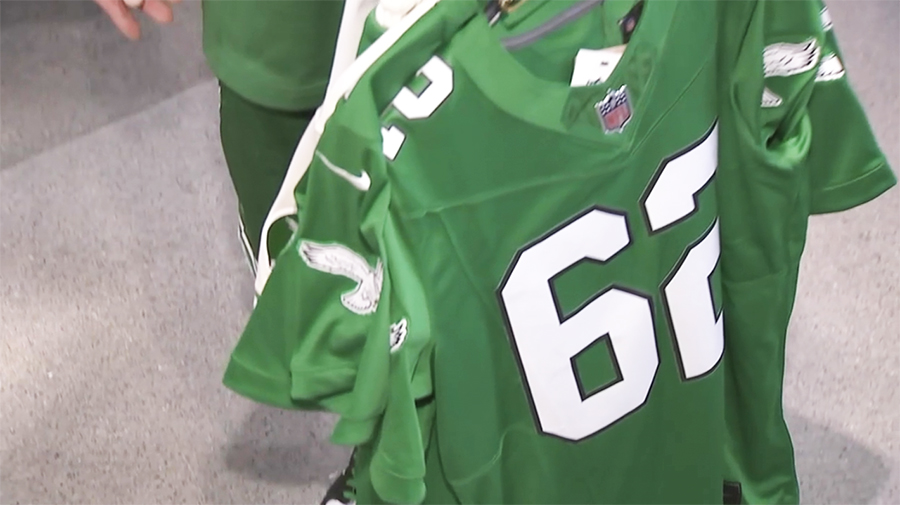
Sport organizations routinely revive vintage logos, uniforms, and historical milestones to spark nostalgia and strengthen brand identity. Yet responses to these campaigns are not uniform. The study finds that fans who lean socially conservative show a stronger preference for retro branding than those who lean liberal, even after accounting for general nostalgia, partisanship, age, income, and other demographic factors. For teams investing in heritage nights, throwback merchandise, or rebranding that looks backward, understanding this ideological dimension offers a practical edge in audience segmentation and messaging.
The paper, “Throwback Jerseys or Not: How Political Ideology Affects Sport Consumer Preference for Retro Marketing,” was published in Sport Marketing Quarterly (2026, Vol. 35, Issue 1). It is co-authored by Sophia D. Min of the University of New Hampshire, TzuShuo R. Wang and Zachary Scola of UMass Boston, and Kevin K. Byon of Southern Methodist University.
Wang and Scola are assistant professors of marketing in the College of Management at UMass Boston. Their research examines sport consumer behavior, branding, and the intersection of politics and fandom.
“We’re proud to see Professors Wang and Scola advancing our understanding of how values shape sport consumption,” said Dean of the College of Management Venky Venkatachalam. “Their work gives marketers actionable insight into a fan base that is more politically diverse than ever.”
Key Research Findings
Using data from 298 U.S. adults who actively follow a sport team, the authors conducted a series of regression analyses. Overall political conservatism predicted stronger preference for retro marketing. When the researchers separated social from economic ideology, only social conservatism remained a significant driver; economic views showed no reliable relationship. The pattern held after controlling for intended presidential vote, trait nostalgia, gender, age, income, and ethnicity.
Predicted preference scores illustrated the practical difference: more socially conservative respondents rated retro marketing highest, centrists fell in the middle, and more socially liberal respondents rated it lowest. Economic ideology produced almost no variation. The findings suggest that the appeal of tradition, continuity, and collective heritage - core elements of retro campaigns - resonates especially with fans who prioritize social stability and established norms.
Sport marketers can apply the results in several ways:
- Tailor retro campaigns more intentionally toward audiences and markets that value tradition and national or local heritage.
- Link team history to broader cultural or patriotic themes when seeking to engage socially conservative fans (for example, inviting veterans to heritage nights).
- Avoid assuming that regional election results perfectly proxy individual ideology; focus instead on messaging that emphasizes continuity and shared legacy.
- Consider timing retro activations during periods of heightened uncertainty, when research suggests many people temporarily shift toward more conservative orientations.
- Balance future-oriented messaging (“a new chapter”) with heritage storytelling so that both liberal- and conservative-leaning fans feel included.
The authors note that political ideology is only one piece of a broader constellation of individual differences. Combining ideology with nostalgia proneness and other psychological variables yields stronger predictive power and more nuanced segmentation.
The full article is available in Sport Marketing Quarterly, 2026, Vol. 35(1), pp. 67–80. DOI: 10.1177/10616934251397215
ABOUT UMASS BOSTON COLLEGE OF MANAGEMENT
As Boston's only public accredited business school, the College of Management is dedicated to educating the region’s next generation of business and community leaders. Recognized for its first-rate faculty and diverse, high-achieving student body, the College offers exceptional learning experiences in collaboration with local businesses. For more information, visit business.umb.edu and connect with us on LinkedIn.