Anne Douglass Advances Leadership in Early Childhood Education
Anne Douglass, professor of early childhood education at UMass Boston, is a nationally recognized leader in early childhood education research, policy, and leadership development. As a professor and the founding executive director of the Early Education Leaders Institute, she has been awarded more than $50 million in research and training funding and led the development of innovative degree programs for early educators. Her work is grounded in a single premise: Young children thrive in early childhood programs when their educators are thriving — when they have the training, resources, respect, and compensation they need. She has helped shape national efforts to make that possible.
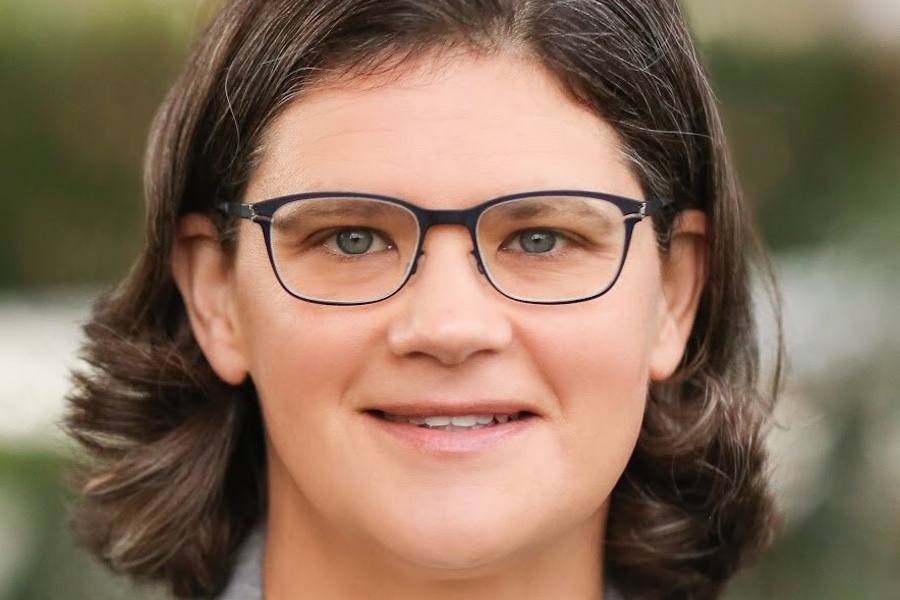
When Anne Douglass joined UMass Boston in 2009, she launched a new bachelor's degree program in early childhood education and created opportunities for a workforce she had spent two decades working in herself.
Douglass worked as a family child care provider, infant and toddler teacher, preschool teacher, child care center director, and quality improvement coach. That firsthand experience continues to shape both her research and her mission.
"I worked in the early childhood field for 20 years before I went back and got my PhD. The workforce is rich with leadership and expertise that has too often been invisible to those outside the field," Douglass said. "I came to UMass Boston to launch a program that would enable experienced early educators who work in child care and Head Start programs across the city to come back to school and get their bachelor's degree, which was a dream of so many, but the accessibility wasn't there.”."
The demand quickly proved her vision, and the bachelor's program grew rapidly and is now the largest and most diverse early education and care BA degree program in all of New England.
Her work expanded beyond the classroom in 2016 with the creation of the Early Education Leaders Institute, an institute that is about to celebrate its 10th anniversary year. The institute now employs over 30 staff members and partners with organizations across Massachusetts and the country to strengthen leadership in the early childhood workforce. Among its central partnerships is that with the Massachusetts Department of Early Education and Care (EEC), the state agency responsible for ECE policy, educator professional development and credentialing, ECE program quality, child care licensing, and child care financial assistance for families across Massachusetts.
"We help EEC build and deliver systems and services in support of the early childhood workforce, and we collect data and study how those systems can be improved and scaled," Douglass said of the institute's partnership with the Massachusetts Department of Early Education and Care.
Much of Douglass' research focuses on improving conditions for early educators, who often face low wages, limited career advancement opportunities, and difficult working conditions.
"Skilled early educators often earn poverty-level wages," she said. "Many don't have health insurance or retirement benefits."
To help address these inequities and support early educators in their careers, the institute works to make professional development more accessible by offering leadership development programs in five languages and creating multiple pathways for educators to advance their careers. These pathways include programs such as Leading for Change in Early Care and Education offered in multiple states, Early Educator Leadership Fellowship programs at the Bachelor’s Degree and Post Master’s Certificate levels, and leaders coaching programs.
Douglass's research extends beyond Massachusetts. As the co-director of research for the National Early Care and Education Workforce Center, she helped lead a first-of-its-kind federally funded national initiative that supported states in improving compensation, career pathways, and working conditions for early educators.
Douglass continues to lead major research initiatives with her team at the institute that examine how leadership shapes outcomes for children, families, and educators.
Among the accomplishments she is most proud of is ensuring that this research directly informs public policy.
"It’s a really big deal to have research that doesn't sit on a shelf somewhere but is actually being used to shape the conditions that affect the lives of early educators, children, and families," she said.
Douglass holds a broad definition of leadership, one that empowers educators at every level.
"Our focus is really on leaders as people who come together with others to solve problems, come up with solutions and create change to improve the field," she said. "You can lead change from wherever you sit."
For Douglass, investing in the people who educate young children ultimately benefits everyone.
"The work of early childhood education couldn't be more important," she said. "What happens in early childhood programs, how we treat and respect the educators who work in those programs, makes a lasting and lifelong difference for children and families and for our economy."