Your Smartwatch Knows a Lot About You. UMass Boston Research Asks What You Want to Keep Private.
Study from the College of Management gives wearable makers a ranked list of what customers care about most.
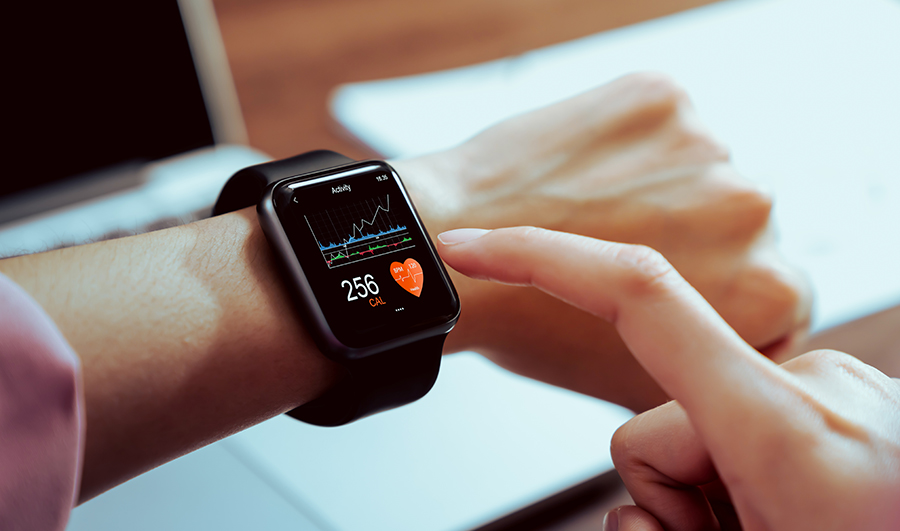
Your watch knows your heart rate, how well you slept last night, and the route you run every morning. It may also know when you’re home and when you’re not. So who else gets to know?
A new study by Romilla Syed, associate professor at the UMass Boston College of Management, takes that question to the people who wear these devices. Instead of guessing what everyday users worry about, she and co-author Leiser Silva of the University of Houston asked them, then turned the answers into a ranked to-do list for the companies that build the gadgets.
Why it matters now
Fitness trackers and smartwatches have become part of daily life, but the rules haven’t kept up. Unlike medical devices, consumer wearables face far lighter regulation, and the health data they collect doesn’t get the same legal protection as data in a doctor’s office. A recent review of leading manufacturers found that 76 percent were rated high risk for transparency about how they handle data.
The researchers found that the data doesn’t just travel from your wrist to your phone. It also moves through third-party apps and the manufacturer’s cloud servers, which gives it plenty of places to leak.
With this in mind, the team interviewed 48 everyday wearable users, brought a focus group together to refine what they heard, and then surveyed 340 U.S. wearable owners to find out which concerns matter most. The result is a map of privacy priorities across three areas: the device itself, the app, and the way data travels between them and the cloud.
What people care about most
- The app comes first. Users ranked privacy at the app level highest, ahead of data in transit and the device itself.
- Control is king. Within the app, people most wanted real choices about their information and a say in whether it’s shared.
- Fake gadgets are a privacy problem. Participants worried about counterfeit trackers and tampered hardware, and at the device level they ranked quality above even PIN locks.
- Nobody reads the fine print. One participant said it plainly: “Who has time to read those agreements?” People asked for short, clear explanations of who gets their data.
Because of this research, manufacturers now get a ranked checklist for building privacy into their products. Shoppers get a way to decide what matters to them and compare devices on that basis, instead of relying on vague privacy policies. Researchers get a method they can reuse to turn user values into design decisions.
“Wearables have become a part of how people manage their health, and with that comes a responsibility to treat their personal data with care,” said Venky Venkatachalam, Dean of the College of Management. “Dr. Syed’s research is a strong example of what our faculty do best: asking practical questions that matter to real people, and producing answers that businesses and consumers can use right away.”
“Smart devices don’t just record our heart rate or our steps anymore. Their algorithms can turn a few data points into a detailed picture of someone’s life,” said Syed. “Giving users choices matters, but it’s no longer enough when data can leak at so many points along the way. Companies need to build privacy into every layer of their product ecosystem, from the device on a consumer’s wrist to the apps and servers in the cloud. And consumers deserve to know whether the devices they buy actually do that.”
About the research paper
The authors note the study has limits. It covers U.S. users only, and wearable technology changes fast. They encourage future work with other cultures, other stakeholders, and newer devices. The paper, “Modeling Privacy Values of Wearable Health Device Consumers: A Value-sensitive Design Perspective,” can be found in the AIS Transactions on Human-Computer Interaction December 2026 edition.
About UMass Boston College of Management
As Boston's only public accredited business school, the College of Management is dedicated to educating the region’s next generation of business and community leaders. Recognized for its first-rate faculty and diverse, high-achieving student body, the College offers exceptional learning experiences in collaboration with local businesses. For more information, visit business.umb.edu and connect with us on LinkedIn and Instagram.