U.S. Rep. Lynch, Chancellor Suárez-Orozco Announce $1 Million in Federal Funding for UMass Boston Sea Water Pump House Project
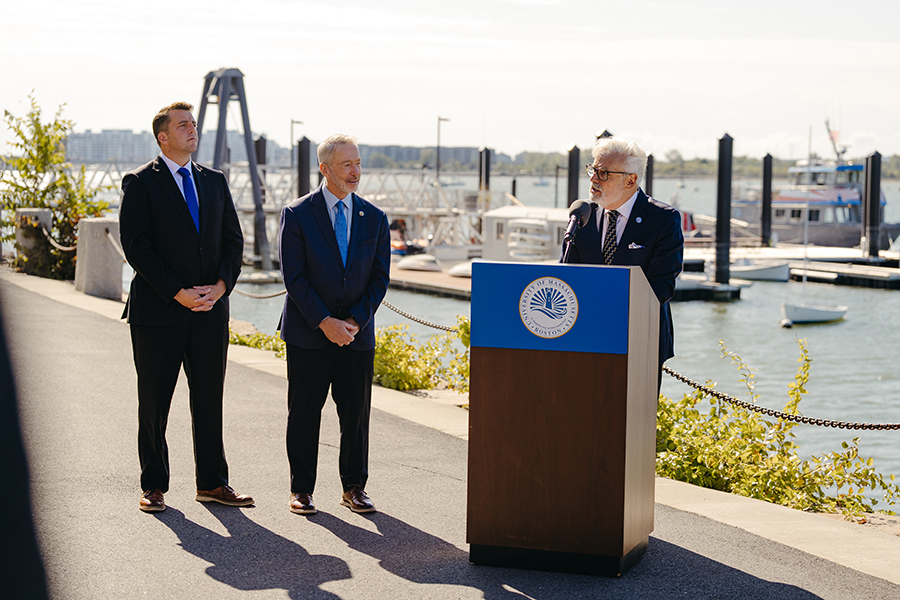
U.S. Congressman Stephen F. Lynch and UMass Boston Chancellor Marcelo Suárez-Orozco today announced $1 million in federal funding to rehabilitate and expand the university’s Sea Water Pump House, a critical piece of campus infrastructure that has provided sustainable and cost-effective cooling to as much as half of the UMass Boston campus for more than 50 years.
The project is part of a broader decarbonization initiative focused on the university’s central utility plant. Three years ago, UMass Boston established an Energy & Carbon Master Plan to reduce its carbon footprint by enhancing the energy efficiency of campus buildings, utilizing renewable energy sources, and providing clean transportation alternatives—measures that will help the university achieve its goal of a 95% reduction in carbon emissions by 2050.
The federal funding supports the rehabilitation of aging equipment and infrastructure, increased cooling capacity and improvements to the resiliency of the Sea Water Pump House.
“I am proud to announce the $1 million in federal funding that we fought for alongside my colleagues in Congress to help UMass Boston rehabilitate the campus's saltwater pump house cooling system,” said Rep. Stephen Lynch. “This building has been quietly doing an enormous job for over 50 years. … This funding is going to allow the university to rehabilitate that pump house, replace the aging equipment, and add new capacity so it can meet the campus's growing cooling needs, not just today but for decades to come.
“This is exactly the kind of project the federal government should be investing in. It protects critical infrastructure, it saves the university money over the long run, and it moves us forward in the fight against climate change all at the same time.”

Chancellor Suárez-Orozco thanked Rep. Lynch for his leadership and for securing this important federal investment in UMass Boston’s energy infrastructure.
“The rehabilitation of the Sea Water Pump House shows how strategic investments can strengthen campus infrastructure, reduce reliance on fossil fuels and advance climate resilience,” said Chancellor Suárez-Orozco. “Massachusetts and Boston are national leaders in climate resilience planning, and UMass Boston is proud to be part of that work and to help shape a clean energy future right here where we live and work.”
The Sea Water Pump House uses ocean water in a thermal transfer mode to provide cooling which is a more energy efficient approach than traditional cooling towers.
The harsh marine environment has contributed to corrosion of equipment, while the age of the pump house and much of its infrastructure makes rehabilitation necessary to ensure reliable cooling for the campus in the future. The project will replace critical equipment, rehabilitate the building and add cooling capacity to support the university’s future needs.
The project will also reverse the thermal transfer process, using heat rejected from the current cooling system, coupled with new equipment, to provide a new source of heat for campus. Once implemented, the approach will allow UMass Boston to begin retiring its four natural gas boilers and significantly reduce greenhouse gas emissions.
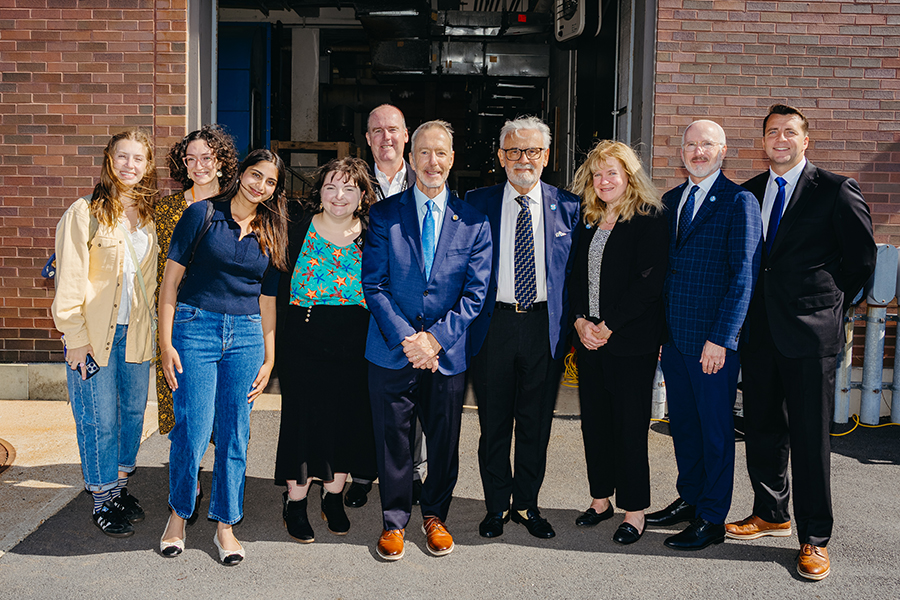
Kayla Bradley, a PhD student in the School for the Environment who also attended UMass Boston as an undergraduate, spoke about the importance of this project to her and her colleagues. Her work focuses on environmental justice, highlighting communities who are more vulnerable to environmental problems.
“Through my time as a student, I have sat in classrooms and laboratories learning and discussing with my colleagues the consequences of climate change and the importance of a clean energy future,” she said. “Climate change presents a significant problem for all people, but will hit many communities within Boston harder than others. As a university committed to serving this city, I believe it is our responsibility to practice what has been preached to me by my professors and by researchers in the UMass community for decades. We must do what we can to become a net zero campus as soon as possible to help avoid the worst impacts of climate change.”