UMass Boston

Urban Planning & Community Development MS

Shape the future of sustainable communities.

Request Info Apply

Description of the image

Request Info

Loading...

Become an expert in building neighborhoods, cities, and communities where people thrive. UMass Boston’s Master of Science in Urban Planning and Community Development combines theory, practice, and hands-on experience in one of the country’s most dynamic, fast-changing cities. As the only public urban planning program of its kind in Boston, you’ll learn alongside experts tackling real challenges in housing, transportation, and sustainability. Graduate ready to make an immediate impact in city government, planning, or community development organizations. 

Here’s your chance to:

  • Engage directly with communities by partnering with residents, local organizations, and municipal agencies through fieldwork, research, and outreach.
  • Analyze policy, demographic, and climate data to develop insights and recommendations that inform real-world decisions.
  • Collaborate with teams to solve complex problems using a mix of planning, policy, and design approaches.
0
annual mean salary of program alumni
UMass Boston Survey Data, 2020-2022
0
of 2024 alums obtained planning or related positions within 1 year of graduation
University Survey, 2025
0
of alumni are employed in the field
UMass Boston Survey Data, 2020-2022

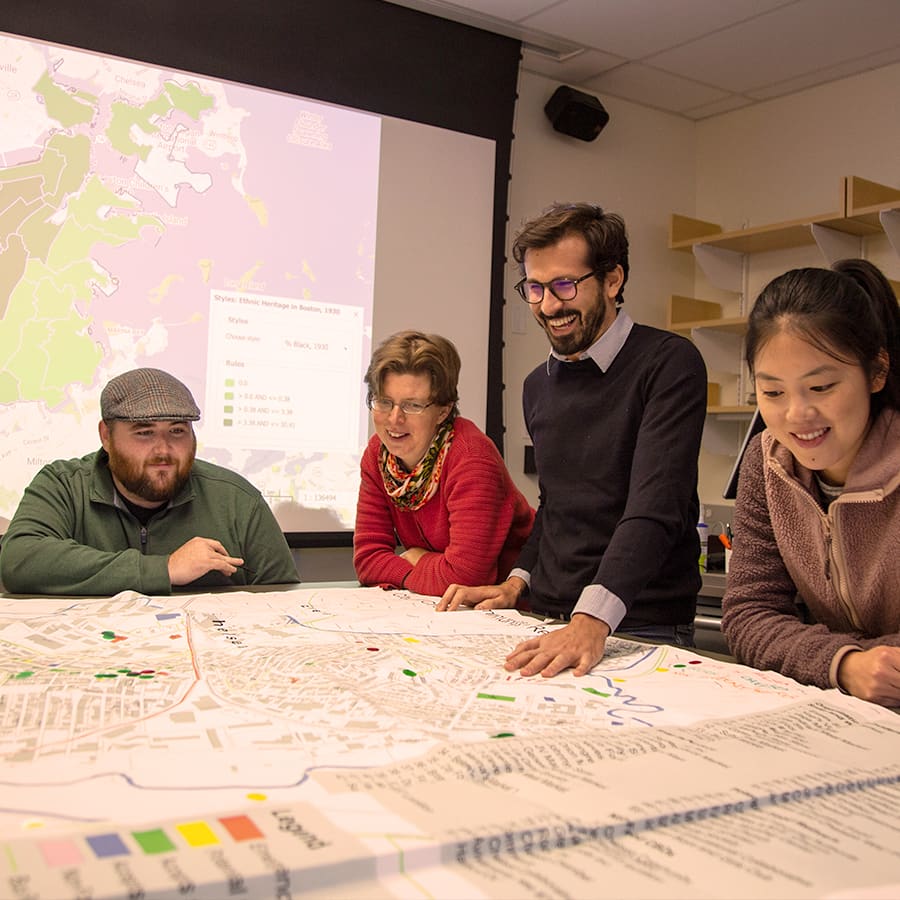
Professor Antonio with Urban Planning students

Career Possibilities

Turn your education into a career in urban planning that reimagines how cities grow. Gain experience through internships, build relationships with alumni and industry leaders, and tap into connections with organizations like the Boston Planning & Development Agency, Massachusetts Bay Transportation Authority, and Massachusetts Department of Transportation. With support from faculty mentors and a dedicated advisor, you’ll be prepared to take on real-life challenges and improve how people live and work. 

Here’s where this degree can take you:

  • Urban Planner
  • Community Developer
  • Environmental Impact Specialist
  • Land Use Planner
  • Transportation Planner
  • Urban Planning Educator
Example Employers of Program Graduates
UMass Boston Urban Planning & Community Development MS alumni launch careers at top companies across the Greater Boston Area, New England, and beyond, including:
City of Boston logo
MBTA
Massachusetts State Seal 2026
Stantec
Greystone
Codman Square Development Corporation
City of Providence

Plan Your Education

How to Apply

Deadlines:

  • Fall Deadline: June 15
  • Spring Deadline: December 1

Application Fee: The nonrefundable application fee is $75. UMass Boston alumni and current students that plan to complete degree requirements prior to graduate enrollment can submit the application without paying the application fee.

Applicants must meet general graduate admission requirements in addition to the program-specific requirements.

Applications are reviewed on a rolling basis.

Financing Your Education

Estimate Your Program Cost: Get a feel for your expected program costs using the Graduate Program Cost Calculator.

Program Cost Information: Significant on-campus tuition discounts are available to residents of Massachusetts, the other New England states, New York, New Jersey, and Pennsylvania. For more detailed information on costs, visit the Bursar's website to learn more about Regular Session Tuition & Fees for in person courses and Special Price Tuition & Fees for online courses. Please refer to Financial Aid for more information.

Program Details

Urban Planning & Community Development MS Application Requirements

In addition to the criteria below, applicants must meet general graduate admission requirements.

  • Personal statement - This statement of purpose is your opportunity to show the graduate admissions committee why you wish to pursue graduate study, as well as your specific interests and goals.

Curriculum

Core Courses (27 Credits):

  • UPCD 600 - History and Theory of Urban Planning 3 Credit(s)
  • UPCD 615 - Urban Real Estate Markets and Development Process 3 Credit(s)
  • UPCD 620 - Analytic Methods for Urban Planning and Community Development 3 Credit(s)
  • UPCD 625 - Analytical Methods II for Planners: Qualitative Techniques 3 Credit(s)
  • UPCD 626 - Spatial Analysis for Urban Design 3 Credit(s)
  • UPCD 631 - Land Use Controls 3 Credit(s)
  • UPCD 632 - Law, Ethics, and Practice in Planning 3 Credit(s)
  • UPCD 635 - Master Planning: Principles and Practice 3 Credit(s)

Concentration Required Courses (9 Credits): Complete three courses from one of the concentrations below.

Community Resiliency Planning Concentration

  • CRSCAD 601L - Social Vulnerability to Disasters 3 Credit(s)
  • CRSCAD 602L - Climate Change, Food & Water Resources 3 Credit(s)
  • CRSCAD 603L - Reconstruction After the Cameras Have Gone 3 Credit(s)

Environmental and Land Use Planning Concentration

  • ENVSCI 674L - Climate and Energy: Law, Policy and Management 3 Credit(s)
  • UPCD 667 - Environmental Planning and Impact Assessment 3 Credit(s)
  • UPCD 701 - Urban and Regional Environmental Planning 3 Credit(s)

Housing and Community Development Concentration

  • UPCD 622 - Citizen Participation and the Right to the City 3 Credit(s)
  • UPCD 720 - Community Development for Urban Planners 3 Credit(s)
  • UPCD 725 - Contemporary Community Development 3 Credit(s)

Concentration Electives (6 Credits): Complete two additional courses approved by your advisor.

Capstone Course (6 Credits): Two semester series of classes that result in a professional group or individual product.

  • UPCD 750 - Planning Studio I 3 Credit(s)
  • UPCD 751 - Planning Studio II 3 Credit(s)
  • UPCD 752 - Professional Planning Report I 3 Credit(s)
  • UPCD 753 - Professional Planning Report II 3 Credit(s)

For more information on curriculum, including course descriptions and degree requirements, visit the Academic Catalog.

Learning Outcomes

  • Demonstrate Knowledge of Planning History, Theory, and Ethics. Students will be able to analyze and apply historical and theoretical foundations of planning practice, and evaluate ethical principles and professional codes in diverse planning scenarios.
  • Apply Guiding Values of Equity, Sustainability, and Diversity. Students will be able to integrate social justice, sustainability, and climate resilience principles into planning decisions at community, regional, and global scales.
  • Utilize Analytical and Technical Skills. Students will be able to apply quantitative, qualitative, and spatial analysis methods to inform planning and policy decisions, demonstrating proficiency in data interpretation and visualization.
  • Integrate Policy, Law, and Economics. Students will be able to synthesize land-use law and urban economics theory into comprehensive and sustainable development strategies.
  • Design Sustainable and Resilient Plans. Students will be able to develop and critically assess urban and regional plans that incorporate sustainability principles, climate adaptation strategies, and equity considerations.
  • Communicate and Collaborate Effectively. Students will be able to demonstrate leadership, teamwork, and communication skills to engage stakeholders and navigate complex planning environments.

Graduation Criteria

Complete 48 credits from 15 courses including nine core courses, three concentration required courses, two concentration electives, and two capstone courses.

Concentration: Select a concentration in environmental land use and planning, housing and community development planning, or community resiliency planning.

Capstone: Completion of UPCD 750 and UPCD 751

Statute of limitations: Five years.

Public Information/PAB Required

Public Information

The Planning Accreditation Board requires this information be posted for the University of Massachusetts Boston.

Master of Science in Urban Planning Program.

Student Achievement

Applied Studio Pedagogy through the Urban Planning Studio

The Department of Urban Planning and Community Development advanced its commitment to applied, equity-centered planning education through UPCD 750/751: Urban Planning Studio, a two-semester sequence aligned with the university’s Grand Scholarly Challenge on Climate Adaptation and Social Vulnerability. The studio focused on flood-induced managed retreat and climate vulnerability among older adults in coastal Massachusetts communities, including Revere, Lynn, Medford, Chelsea, Quincy, and Wareham. Students engaged with a complex, real-world planning problem that required integrating spatial analysis, policy review, demographic analysis, and ethical community engagement. The studio structure emphasized iterative learning, interdisciplinary collaboration, and professional standards of planning practice.

A core component of the studio was direct community engagement, including background vulnerability assessments, institutional mapping, and structured interactions with older adults in six Massachusetts communities. Students analyzed Municipal Vulnerability Preparedness (MVP) plans, FEMA and state climate risk data, and housing system characteristics to develop community-specific climate and vulnerability profiles. These assessments served as the analytical foundation for subsequent fieldwork, including focus groups and surveys conducted in partnership with local organizations and municipal agencies. Through this process, students developed competencies in ethical research design, stakeholder engagement, data interpretation, and professional communication—skills central to planning practice.

The studio produced professional-quality deliverables intended for both academic and practitioner audiences, including comparative vulnerability profiles, preliminary policy analyses, and synthesis reports addressing the implications of managed retreat for aging populations. Students demonstrated the ability to translate complex data into actionable planning insights while grappling with normative questions of equity, displacement, and intergenerational responsibility. Collectively, the studio strengthened the department’s applied learning portfolio, reinforced its ties with municipal and community partners, and provided students with sustained exposure to planning challenges at the intersection of climate change, housing, and social vulnerability. This work exemplifies UPCD’s pedagogical emphasis on experiential learning, public-interest planning, and preparing students for professional practice in a rapidly changing policy and environmental context.

2025-2026 Tuition and Fees

In State Residents, spring semester: 

$885.50 per credit, $7,969.50 per semester

Out of State Residents, spring semester: 

$1,692.30 per credit, $15,230.70 per semester

Student Retention Rate

Percentage of students who began studies in fall 2024 and continued into fall 2025: 

84%

Student Graduation Rate

Percentage of students graduating within 4 years, entering class of 2021: 

86%

Number of Degrees Awarded

Number of degrees awarded for 2024-2025 Academic Year

4

AICP Pass Rate

Percentage of students taking the AICP exam within 3 years who pass, graduating class of 2021

73%

Employment

Percentage of all graduates obtaining professional planning, planning-related, or other positions
within 12 months of graduation, graduating class of 2024

100%

Contact

Graduate Program Director Richard Hung
richard.hung@umb.edu

Accreditation

The MS program in Urban Planning and Community Development is accredited by the Planning Accreditation Board

The Planning Accreditation Board (PAB)


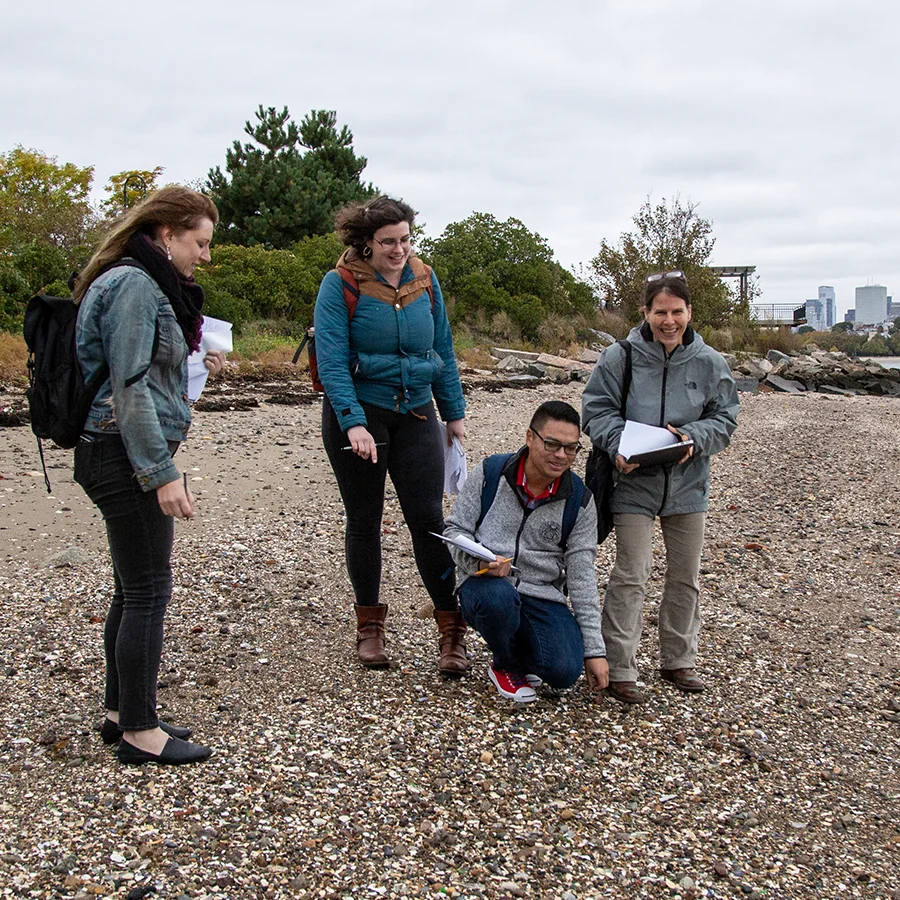
Students carrying clipboards examine shore of Carson Beach Boston.

Global Learning Through Real Projects.

Collaborate with students and professionals across the globe through planning experiences that connect classroom learning to communities. Work with students from Feng Chia University on joint environmental planning projects focused on Boston and Taichung, and take part in immersive experiences like the Summer Sicily Program, where students analyze GIS and property data, conduct research, and contribute to community-centered planning discussions alongside local residents and organizations.

Program Faculty

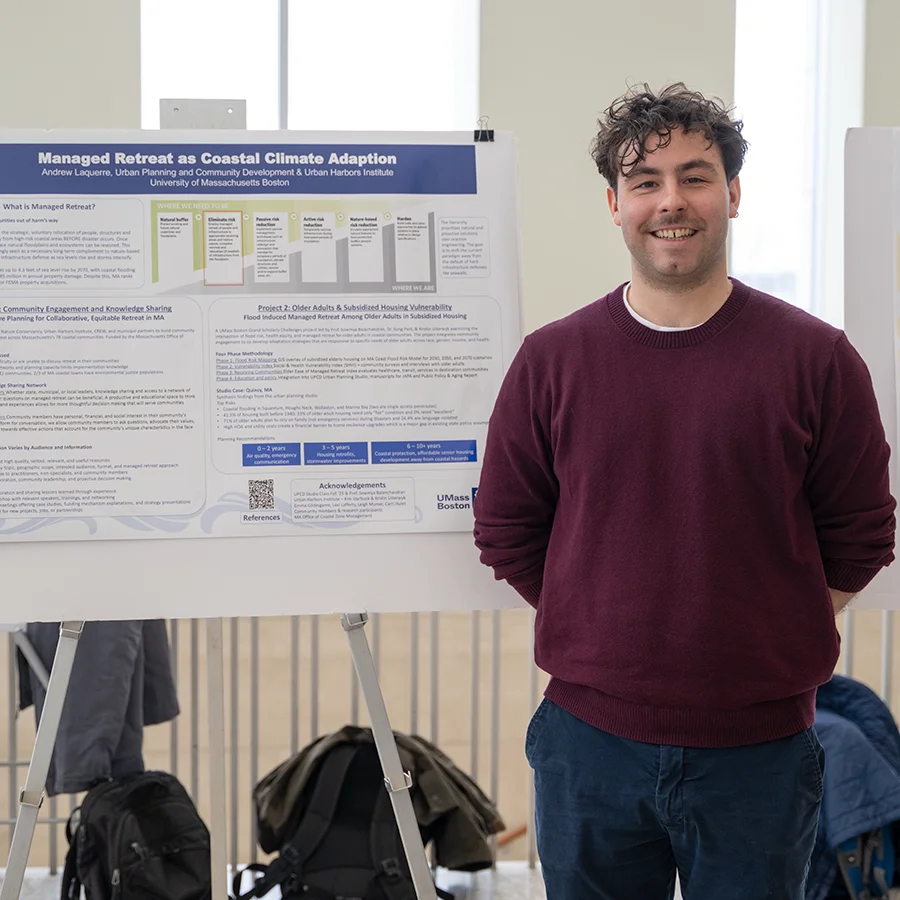
Student presents research on poster board at Earth Day symposium UMass Boston.

Academic Community

Explore the department and college that supports your journey in Urban Planning & Community Development.