
Welcome
Want to improve the planet and help communities? We can help.
If you value practical experience, civic responsibility and academic excellence we invite you to explore our internationally-ranked graduate programs and pioneering work of our faculty and research centers.
Academic Programs
Graduate Programs
Accelerated Master's
About Our Department
Learn to manage conflict, build security, and govern local and global organizations through our programs. Collaborate with our faculty who are internationally-recognized scholars and practitioners in fields spanning conflict resolution, human security and global governance. More about our research areas
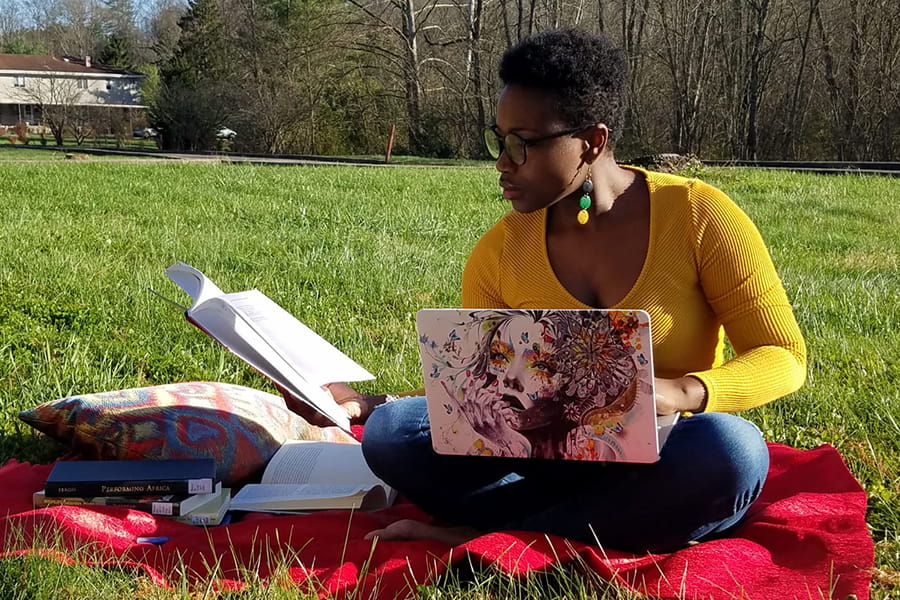
Take a Class
Start earning credits by taking a class as a non-degree student. This allows you to assess the content and structure of the program before applying. These graduate-level credits can transfer to one of our graduate degrees (restrictions apply).
About Taking a Class
This is a great way to "sample" the programs before applying and evaluate whether it meets your goals and interests. You must have a bachelor's degree to enroll and if you earn a B or better, and are later admitted to one of the degree programs listed below, the credits will count towards degree (maximum of 6 credits allowed).
- Conflict Resolution MA
- Conflict Resolution graduate certificate (in person, online, hybrid)
- Global Governance and Human Security MA
- International Relations MA
Visit the Bursar’s website to research costs. All courses are subject to regular session rate and New England regional rate is not applicable for non-degree students.
Please visit the guest student section of the Registrar's website for more information regarding non-degree registration.
Contact conresglobal@umb.edu for more information.
Take a Class Options
If you value practical experience, civic responsibility and academic excellence we invite you to explore our internationally-ranked graduate programs and the pioneering work of our faculty and research centers.
Contact conresglobal@umb.edu for more information.
Spring 2027 Take a Class (non-degree) Options
Special Topics: African Politics with Ellen Milimu Busolo Thursdays 5:30 - 8:15 PM What is the nature and character of politics in Africa at the interpersonal, structural, and systemic levels, and how do these political dynamics shape Africa’s regional relationships and position within the global political and economic order? This course critically examines the nature and characteristics of politics in Africa through interpersonal, structural, and systemic levels of analysis. It explores the historical and contemporary forces shaping African political systems, focusing on colonialism and its legacies, governance, democratization, political economy, development, conflict and peacebuilding, gender, and social inequalities. Particular attention is given to the relationship between domestic political dynamics, regional integration, and Africa’s position within the changing global order. The course will also use case studies from particular countries to explore these themes to provide in depth analysis of the continent of Africa while establishing diverse perspectives and experiences. Drawing on interdisciplinary scholarship, the course investigates how power, institutions, identities, and competing political and economic interests shape political processes and outcomes across African societies. Students will critically engage with the works of Frantz Fanon, W. E. B. Du Bois, Dambisa Moyo, William Easterly, and other influential scholars to examine debates on decolonization, dependency, development, African agency, and global power relations.
International Political Economy with Josh Weitz Mondays 5:30 - 8:15 PM The course engages students in a study of the relationship between economics and politics in global affairs, applying interdisciplinary scholarship to explore the problem of scarcity and the development and functioning of international markets. Topics may include the behavior of institutions such as the World Bank, the International Monetary Fund and the World Trade Organization; non-governmental organizations such as multinational corporations, local business partnerships, and workers unions; and other political entities situated at the domestic, national, regional, and global levels.
Conflict Resolution Systems in Organizations with Eben Weitzman Mondays 5:30 - 8:15 PM This course examines different systems for managing conflict. The system may exist in a large corporation, or between two or among many nations, between labor and management, or within a family. The system may be explicit and clear, informal and invisible, or both. The system may be effective or not. The course explores different kinds of conflict management systems and criteria for measuring their effectiveness; and discusses the analysis and design of dispute managing systems.
Conflict Resolution Introductory Theory with Mehr Latif Tuesdays 1:00 PM - 3:45 PM This course examines the theories and assumptions underpinning the practice of negotiation and mediation. It identifies the major schools of thought that influence models in practice and shape research agendas. It examines theories critically, with three aims-uncovering implicit assumptions of practice, testing those assumptions against empirical evidence or other theories, and gleaning insights to assist practitioners.
Issues in Conflict Resolution Large Group Methods with Eben Weitzman Tuesdays 5:30 - 8:15 PM Group conflicts are characterized by increased complexity, quicker rates of escalation to violence, and longer time frames than individual-level conflicts, creating a greater tendency for stagnation and intractability. In recent years, an increasing number of scholars and practitioners of conflict resolution have sought to develop methods to manage conflicts among large numbers of people. This course seeks to present some of the most popular such methods in the field and to hear from some of the professionals who utilize them. Students will have the option to design, conduct, and evaluate their own large group intervention as a final project, or to evaluate the large group intervention that we will conduct as a class.
Court Mediation Internship (plus 1/2 day each week in local small claims court) Tuesdays 5:30 - 8:15 PM This is a 6-credit course which involves both a regular class meeting and spending a half-day per week in court for four months. In court, students mediate actual cases under the direction of a supervisor/coach. Students are paced in courts in Quincy or Dorchester that are accessible by public transportation. There is also a required two-day pre-court training workshop in January. Completion of the course fulfils requirements of the Guidelines for Implementation of Qualification Standards for Neutrals in Massachusetts. If interested, contact Kelly Ward Mason at Kelly.Ward@umb.edu.
Environmental Conflict with Stacy VanDeveer Wednesdays 5:30 - 8:15 PM This course explores environmental issues and resources as sources of and contributors to conflict, and as avenues and opportunities for conflict resolution and peace-making. Research and concepts from multiple disciplines, many world regions and many environmental and resource challenges are included.
Conflict Peace and Education with Karen Ross (Online/Asynchronous) The fundamental premise of this course is that education, broadly defined, has the potential to contribute to transformation of conflict, just as it can contribute to the perpetuation of violence and structural inequalities. Over the course of the semester, we will explore the potential role of education in peace building and conflict transformation as well as its role in maintaining and furthering conflict. We will do this by discussing education practice and policy, drawing on examples in formal, non-formal and informal education settings. We will also address both substance and pedagogy in the educational realm and how these can serve to maintain or transform conflict.
Negotiation with Jeff Pugh (Online/Asynchronous)- Negotiation is the bedrock skill in this field. The course addresses the development of negotiation techniques and fosters student knowledge of the substantial body of negotiation theory that is now available.
Virtual Summer Institute
Conflict Transformation Across Borders virtual summer institute.
Spend two weeks in June learning about peacebuilding, border conflicts, migration, and
conflict transformation together with participants and fantastic guest speakers from all over Latin
America and the world! UMass Boston, in collaboration with Latin American partner universities
in Ecuador, Brazil, Costa Rica, and Uruguay, will hold their Virtual Summer Institute on Conflict
Transformation Across Borders each summer. Students will enroll through their respective
university and participate in two weeks of virtual (Zoom) classes in June 2026. The Summer
Institute will include the analysis of concrete cases of conflict, peacebuilding, refugees and border
challenges, as well as practical skills training on conflict analysis, actor mapping, negotiation and
mediation and proposal writing, with top-level guest speakers from around the world. Cases
drawn from Colombia, Ecuador, Brazil, Haiti, Costa Rica, and the United States will provide
concrete examples. Participants will design their own proposal for a peacebuilding Intervention
and will receive feedback from a panel of experienced experts in the field, and they will produce
a 'public engagement' project such as an op ed or podcast episode.
This course will be cofacilitated by Dr. Jeffrey Pugh of UMass Boston's Department of Conflict Resolution, Human Security and Global Governance, Dr. Cecile Mouly of FLACSO Ecuador, and Dr. Monica Herz of PUC de Rio, as well as other speakers.
For more information, contact Kelly Ward Mason at kelly.ward@umb.edu
Summer Programs
We offer academically rich summer programs focusing on Community Peace Building and Conflict Transformation Across Borders where you can earn up to 6 credits towards a master's degree. There are no prerequisites for these programs and advanced undergraduates will be considered. Contact conresglobal@umb.edu for more info.
Transform Learning into Action
Our centers and projects conduct innovative research and provide students with opportunities to gain hands on skills.


